
Manchanabele Dam


Basic Info: Manchanabele Dam is a reservoir and dam located near the village of Manchanabele in the Ramanagara district of Karnataka, approximately 40 km from Bangalore.
District: Bangalore Rural
Location Type: Bangalore Rural district, Karnataka, India
Best Time To Visit: Monsoon Season
Manchanabele Dam: Distance, Safety, Activities & Full Day Trip Guide from Bangalore

Manchanabele Dam is a reservoir built across the Arkavathi River in Ramanagara district, southwest of Bangalore. It's known for kayaking, birdwatching, and scenic trekking trails around the reservoir — but it's also a spot where visitor access has changed over the years, so it's worth knowing exactly what's allowed before you go. Here's a complete, accurate guide: distance, safety, activities, and a full day plan.
Is Manchanabele Dam safe to visit? What's actually allowed today

Manchanabele Dam is open for day visits, but direct entry into the reservoir itself — swimming or wading into the water unsupervised — is not something we'd recommend. The reservoir bed has uneven depths, sudden drop-offs, and has been linked to visitor deaths in the past. Public entry to the dam structure itself is also restricted in places.
That said, the area around the reservoir is very much active: licensed operators run supervised kayaking, boating, and rappelling sessions in designated safe zones, and the surrounding hills are open for trekking. The safest way to enjoy the water here is through one of these guided activities rather than venturing in independently..
How far is Manchanabele Dam from Bangalore?

Manchanabele Dam is about 40–45 km from central Bangalore, and the drive usually takes around 1 to 1.5 hours depending on traffic and starting point. It sits in Ramanagara district, southwest of the city, accessible via Magadi Road.
Manchanabele Dam day trip itinerary
6:00 AM — Leave Bangalore via Magadi Road.
7:15–7:30 AM — Arrive at Manchanabele; take in the reservoir and surrounding hills in the cool morning light.
8:00 AM — Kayaking or boating session with a local operator.
10:00 AM — Short trek along one of the reservoir-side trails.
11:30 AM — Birdwatching or a relaxed walk before the day heats up.
12:30 PM — Begin the return, or extend the day at a nearby resort instead of heading straight back.
If you'd rather turn this into a fuller day than a half-day outing, pair it with a stay nearby — see below.
Where to Stay: Suggee Resort
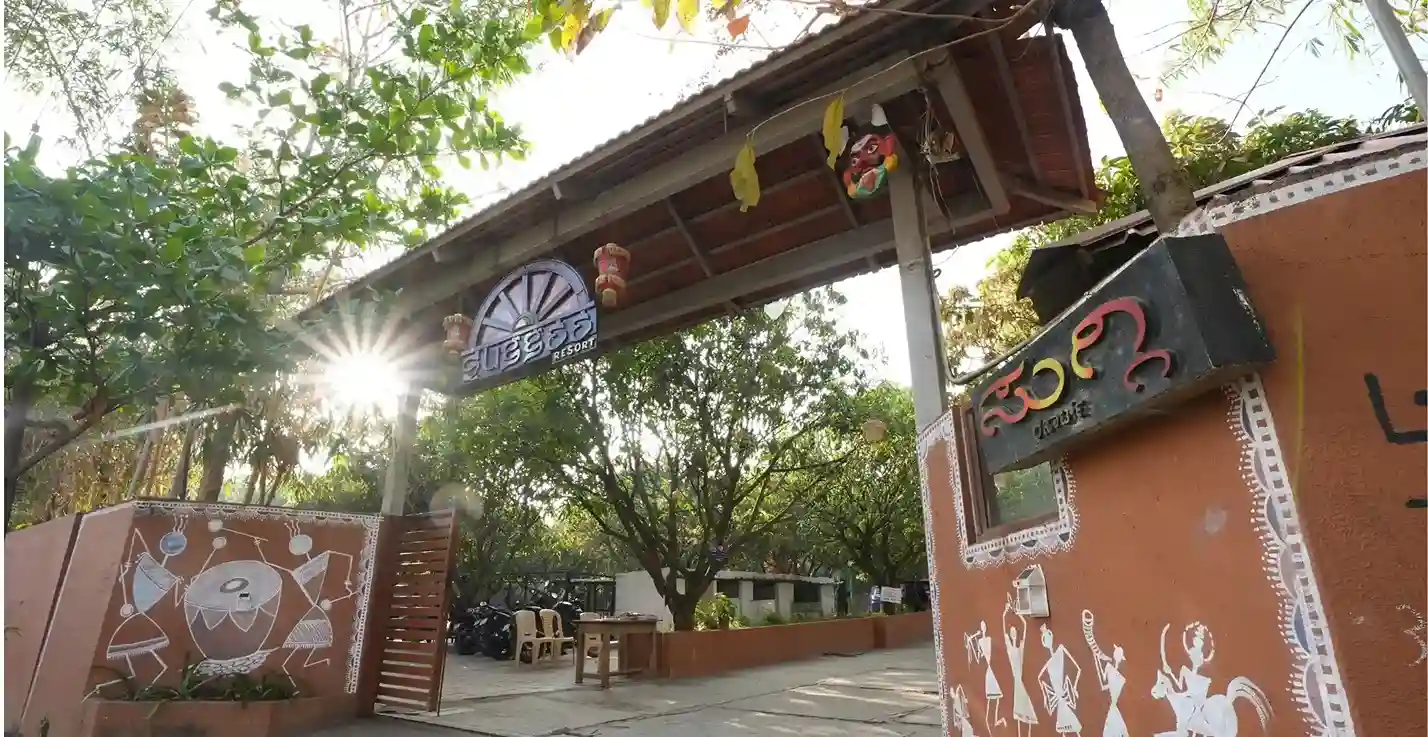
Manchanabele Dam is 1 hour 30 minutes away (53 km) — far enough to make the drive worth it, close enough to still get there by morning. Suggee Resort sits on the outskirts of Bangalore, which means you're not adding city traffic to an already longish drive. Pack your day with kayaking, trekking the reservoir ridgeline, and catching the post-monsoon water at full stretch — then come back to something that actually feels like a break. Rooms, food, and enough open space to shake off the day properly. Book this stay and let the dam trip be the plan, not the whole trip.
Best time to visit Manchanabele Dam

The best time to visit is between October and February, right after the monsoon. The reservoir is full, the surrounding hills are green, and water levels are at their most scenic. Visiting during the monsoon itself (June–September) shows the dam at its most dramatic, with water flowing at full strength, though some activities may be paused for safety during heavy rain. Summer (March–May) sees lower water levels and a drier, browner landscape.
Things to do at Manchanabele Dam

Kayaking and boating — The calm reservoir waters are well suited to kayaking, canoeing, and paddle boating, typically run through licensed operators in supervised areas.
Trekking — The hills surrounding the reservoir offer trekking trails of varying difficulty, with views over the water and valley. Most routes are considered moderate and manageable for reasonably fit beginners.
Rock climbing and rappelling — For those looking for something more physical, a few operators offer guided rappelling and climbing sessions on the rocky terrain nearby.
Birdwatching — The reservoir and surrounding forest are home to a wide range of species, including kingfishers, herons, and marsh harriers, making it a good spot for casual birdwatchers as well as serious ones.
Photography — Misty mornings, still water, and surrounding hills make this a popular spot for landscape photography, especially just after sunrise.
Birdwatching at Manchanabele Dam

The reservoir and surrounding forest support a genuinely wide range of birdlife, making this one of the better casual birdwatching spots within easy reach of Bangalore. Regular sightings include the Marsh Harrier, Oriental Honey Buzzard, Purple Heron, Indian Roller, and several kingfisher species along the water's edge. Early morning is the best window, both for activity levels and for the calmer light. A basic pair of binoculars is enough for most casual sightings — you don't need specialized gear to get a good look at most of what's around the reservoir.
Practical tips before you go

There are no shops or restaurants near the reservoir, so carry your own food, water, and any essentials for the day. Mobile signal is generally reliable, which helps if you're coordinating with a kayaking or trekking operator on arrival. If you're driving yourself, roads leading in are serviceable but can be uneven in patches — a bit more care is worth it than on a typical highway drive. As with any reservoir-adjacent trekking spot, stick to marked trails and avoid getting close to the water's edge on your own.
Manchanabele Dam vs Savandurga: which suits your day better
Both are in the same Ramanagara-district cluster southwest of Bangalore, but they suit slightly different plans. Manchanabele Dam is built around water — kayaking, boating, birdwatching — with lighter, shorter treks around the reservoir. Savandurga is built around elevation — one of Asia's largest monolithic hills, with longer, steeper treks and rock climbing, but no water activities.
If your group wants a relaxed day with some water-based adventure, Manchanabele is the better fit. If you're looking for a proper trekking challenge with panoramic views from the top, Savandurga suits that better. Some visitors combine a short stop at both in a single day, given how close they are to each other.
Camping near Manchanabele Dam
A few operators run supervised overnight camping setups near the reservoir, typically including tents, a bonfire, and a simple dinner as part of the package. This is a reasonable option if you'd rather turn the trip into an overnight rather than a single day, though it's worth booking through a known operator rather than arranging anything informal near the water, given the access restrictions mentioned earlier.
Is Manchanabele Dam good for a corporate outing?
Yes, the open space, kayaking, and trekking trails make it a reasonably good fit for team outings, particularly smaller groups who want an active, informal day rather than a conference-style offsite. Larger corporate groups may find the lack of on-site facilities (no shops, limited parking, no dedicated event space) a constraint — in that case, a resort day outing with proper group facilities may be a better fit for the full event, with Manchanabele as an optional add-on activity.